
What is RAG (Retrieval-Augmented Generation)?
RAG is an AI architecture that connects language models to external data sources in real-time, enabling them to provide current, sourced answers.
In brief
- Connects LLMs to fresh external data
- Drastically reduces AI hallucinations
- Architecture used by Perplexity, Google AI Overviews
Why RAG matters in 2026
RAG has become the dominant architecture in 2026 for a simple reason: users demand reliable and current answers.
The Impact for GEO
RAG fundamentally changes the optimization rules. Here's why:
1. Freshness Becomes Critical
Unlike classic LLMs that rely on old training data, RAG systems actively search for recent content. Regularly updating your content is no longer optional.
2. Indexability Determines Citability
If crawlers can't access your content, RAG systems can't retrieve it. Your site's technical accessibility directly influences your AI visibility.
3. Structure Facilitates Extraction
RAG systems extract specific passages from your pages. Well-structured content (headings, lists, clear definitions) will be more easily "chunked" and cited.
4. Authority Remains Paramount
Even with RAG, systems prioritize authoritative sources. E-E-A-T signals (Experience, Expertise, Authoritativeness, Trustworthiness) influence which sources are selected.
Full definition
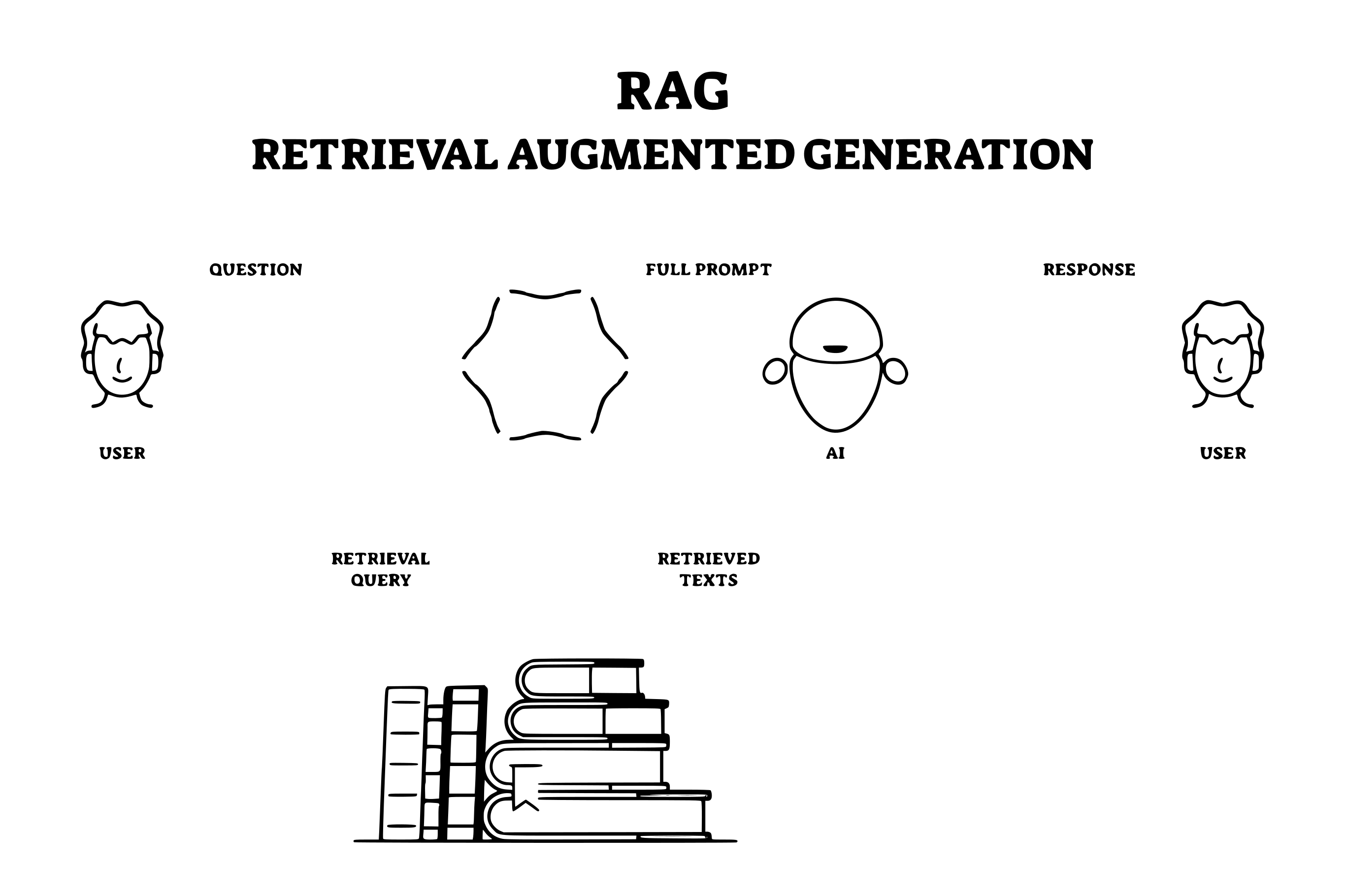
RAG (Retrieval-Augmented Generation) represents a revolution in AI system architecture. Instead of relying solely on "frozen" knowledge learned during training, a RAG system retrieves relevant information from external sources before generating its response.
How RAG Works
- User Query: The user asks a question to the AI system
- Retrieval Phase: The system searches databases, the web, or documents for the most relevant information
- Context Augmentation: Retrieved information is added to the LLM's context
- Response Generation: The LLM generates a response based on this fresh data
This architecture solves two major problems with classic LLMs:
- Outdated Data: LLMs are trained on data from a specific date. GPT-4 "knows" nothing about events after its cutoff date. RAG enables real-time information access.
- Hallucinations: By grounding responses in verifiable sources, RAG significantly reduces the risk of the AI "inventing" information.
RAG in Today's Ecosystem
- Perplexity AI: The most visible use case. Perplexity combines an LLM with real-time web search to provide sourced answers with clickable citations.
- Google AI Overviews: Google uses a form of RAG for its AI Overviews, combining Gemini with the search index.
- ChatGPT Browse: ChatGPT's web browsing feature is a RAG implementation.
RAG vs Fine-Tuning: The Comparison
| Criteria | Fine-Tuning | RAG (Retrieval-Augmented Generation) |
|---|---|---|
| Metaphor | Learning by heart | Consulting an open book |
| Data | Frozen at training time | Fresh and real-time |
| Cost | High (retraining) | Moderate (retrieval infrastructure) |
| Hallucinations | Risk present | Reduced (verifiable sources) |
| Use Case | Style, tone, specific domain | Current facts, citations, research |
| Examples | Custom brand chatbots | Perplexity, Google AI Overviews |
How Atyla handles it
Atyla measures your presence in answers from AI engines that search the web, like Perplexity and, on the Growth plan, Google AI Overviews.
What Atyla shows you
- Cited links: for every question, the pages the AI cites as sources, on your site and on your competitors’.
- The real answers: the exact text of every answer, time-stamped, with your brand highlighted.
- A page-by-page audit: every week, what stops AI from understanding or citing a page, and how to fix it.
- The effect of your fixes: every completed action is compared before and after, on the questions it targets.
Why it matters
AI engines that cite sources show clickable links: being cited can bring visits, which you can track in Google Analytics 4.
Frequently asked questions
What's the difference between RAG and Fine-Tuning?
RAG connects AI to external data (like consulting an open book), while Fine-Tuning retrains the model (like learning by heart). RAG enables fresh data with citations, Fine-Tuning customizes style and domain.
Why does RAG reduce hallucinations?
RAG grounds responses in verifiable sources retrieved in real-time. Instead of inventing, the AI cites existing information. This is why RAG systems like Perplexity provide citations with their responses.
How do I optimize my content for RAG systems?
To be cited by RAG systems: 1) Ensure your site is crawlable by AI bots, 2) Structure your content clearly (headings, lists), 3) Update regularly, 4) Include verifiable facts and original data.
Does Perplexity use RAG?
Yes, Perplexity is the most famous example of consumer RAG architecture. For each query, it searches the web in real-time, selects relevant sources, and generates a response with clickable citations.